Real Patient Case Study · Shared With Authorization

Reconstruction after a severe dog attack.

A documented 12-week progression from traumatic arm injury through staged wound care, reconstructive coverage, and functional recovery.

Clinical images are presented below with a medical-content advisory.

Medical content advisory.

This page contains real clinical images documenting a traumatic injury and reconstructive surgery. The initial-injury and immediate-postoperative photographs are blurred by default and may be revealed individually.

The case is shared for educational purposes with patient authorization. No personally identifying information is included.

A staged approach to reconstruction.

Following a severe dog-bite injury to the arm, the patient underwent two surgical debridements over the next 14 days to remove nonviable tissue and prepare the wound for definitive coverage.

Reconstructive surgery was completed on May 5, followed by close postoperative monitoring, staple removal, continued wound healing, and scar maturation. At the July 13 follow-up, the arm remained fully functional.

2Staged surgical debridements
14Days of wound preparation before reconstruction
12Weeks documented from injury to latest follow-up
FullArm function at the July 13 follow-up

From severe injury to reconstructive recovery.

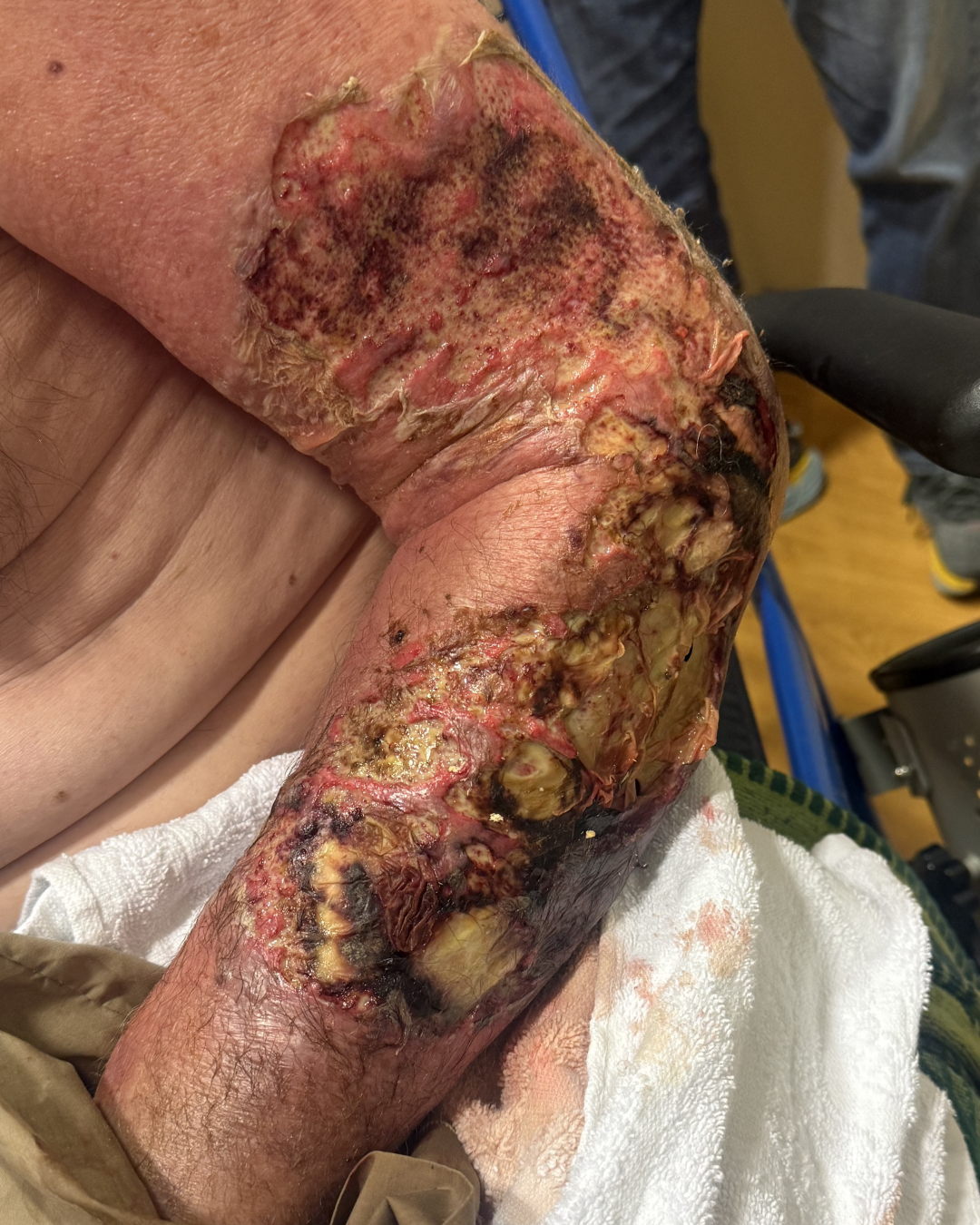
Severe traumatic soft-tissue injury to the arm immediately following a dog attack
Clinical image · Initial injury

April 20 · Initial Presentation

Extensive traumatic soft-tissue injury.

The patient presented with a severe dog-bite injury involving the upper arm, elbow, and forearm. The degree of tissue damage required a staged surgical plan rather than immediate definitive closure.

Treatment timing is individualized according to wound condition, contamination, tissue viability, and reconstructive requirements.
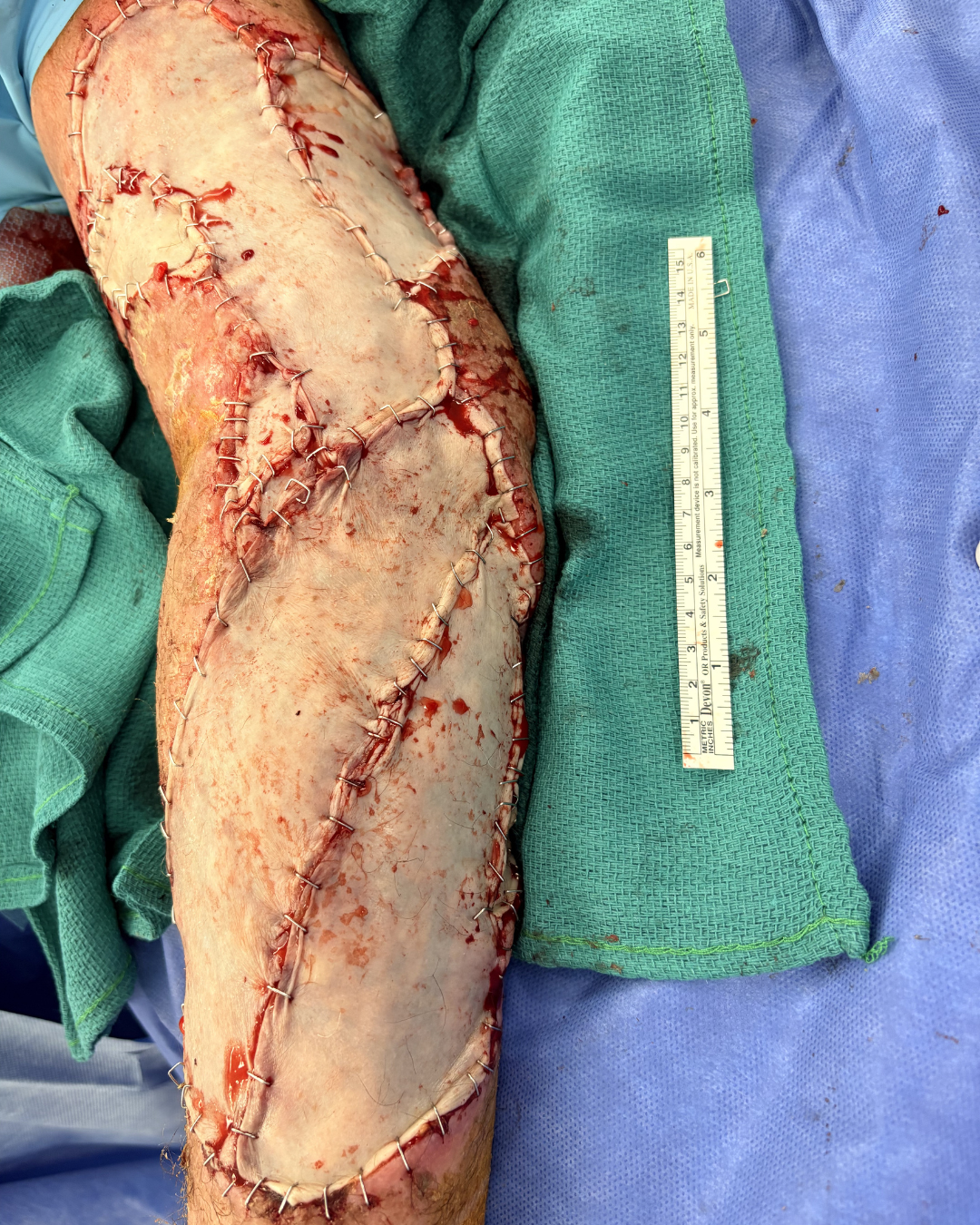
Arm immediately after definitive reconstructive coverage with skin grafting
Clinical image · After reconstruction

May 5 · Definitive Reconstruction

Reconstructive coverage after serial debridement.

Once the wound was adequately prepared, definitive reconstructive coverage with skin grafting was completed. The immediate postoperative image documents the extent of coverage required across the injured arm.

The image reflects an immediate postoperative stage and not a final result.

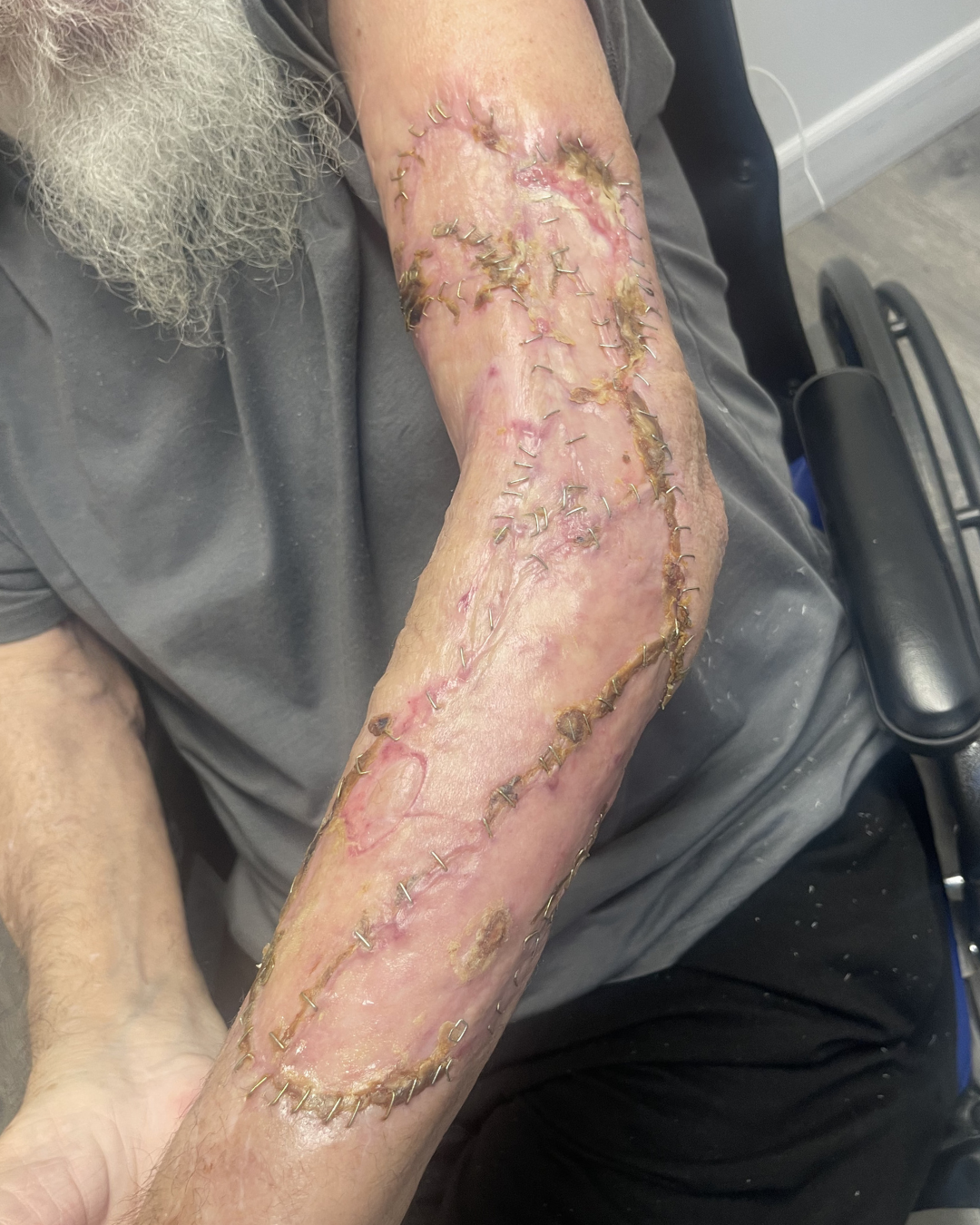
Reconstructed arm healing with staples in place at postoperative follow-up
Follow-up · Staples in place

June 15 · Postoperative Healing

Coverage healing with staples in place.

The reconstructed area continued to heal under close postoperative monitoring. Staples remained in place while the graft and surrounding tissue progressed through the early healing phase.

Reconstructed arm following staple removal with continued wound healing
Follow-up · Staples removed

June 29 · Staples Removed

Stable closure and continued tissue maturation.

Following adequate healing, the staples were removed. The wound remained closed as the reconstructed tissue continued to settle, strengthen, and mature.

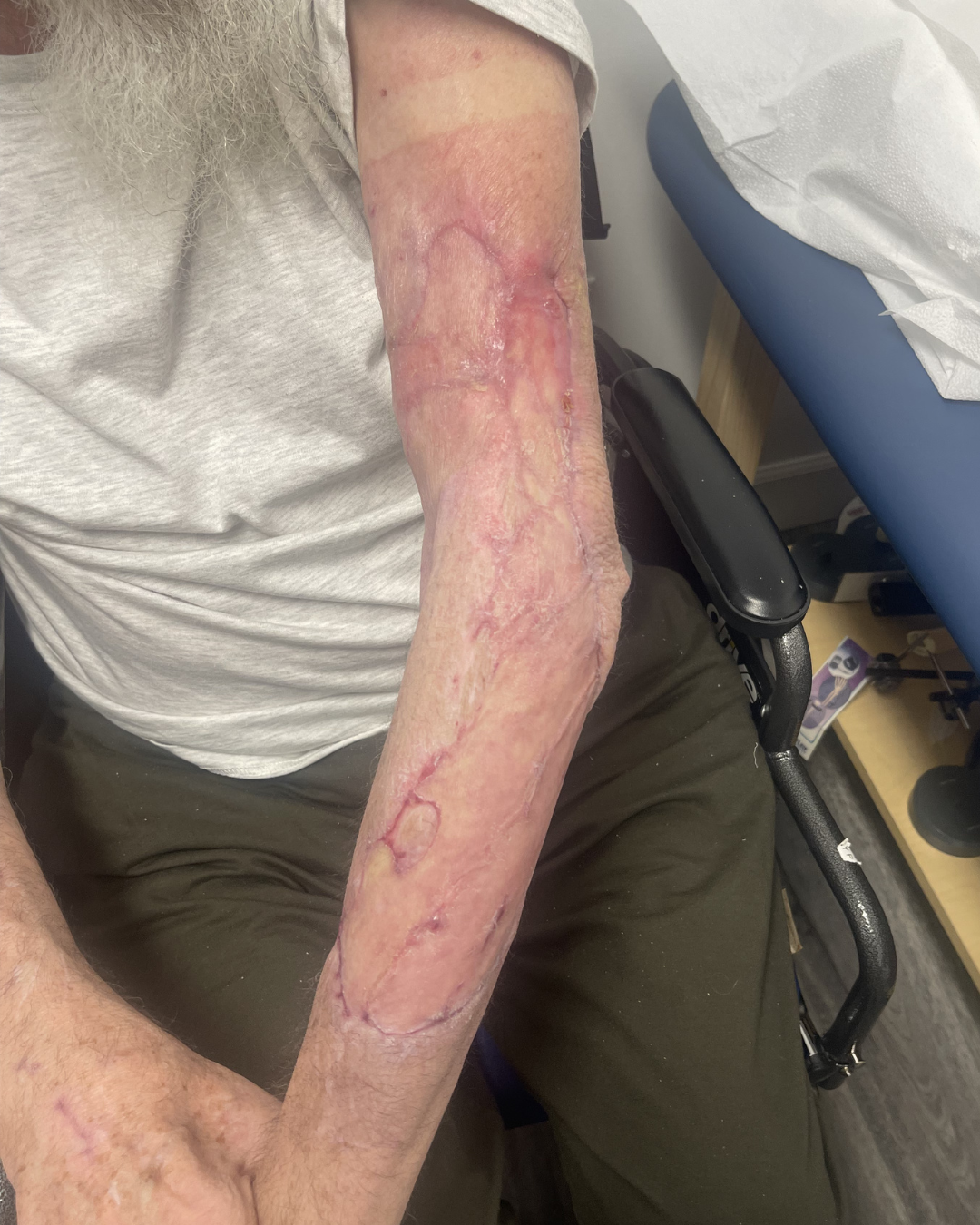
Substantially healed reconstructed arm at the July 13 follow-up
Latest follow-up · July 13

July 13 · 12-Week Follow-Up

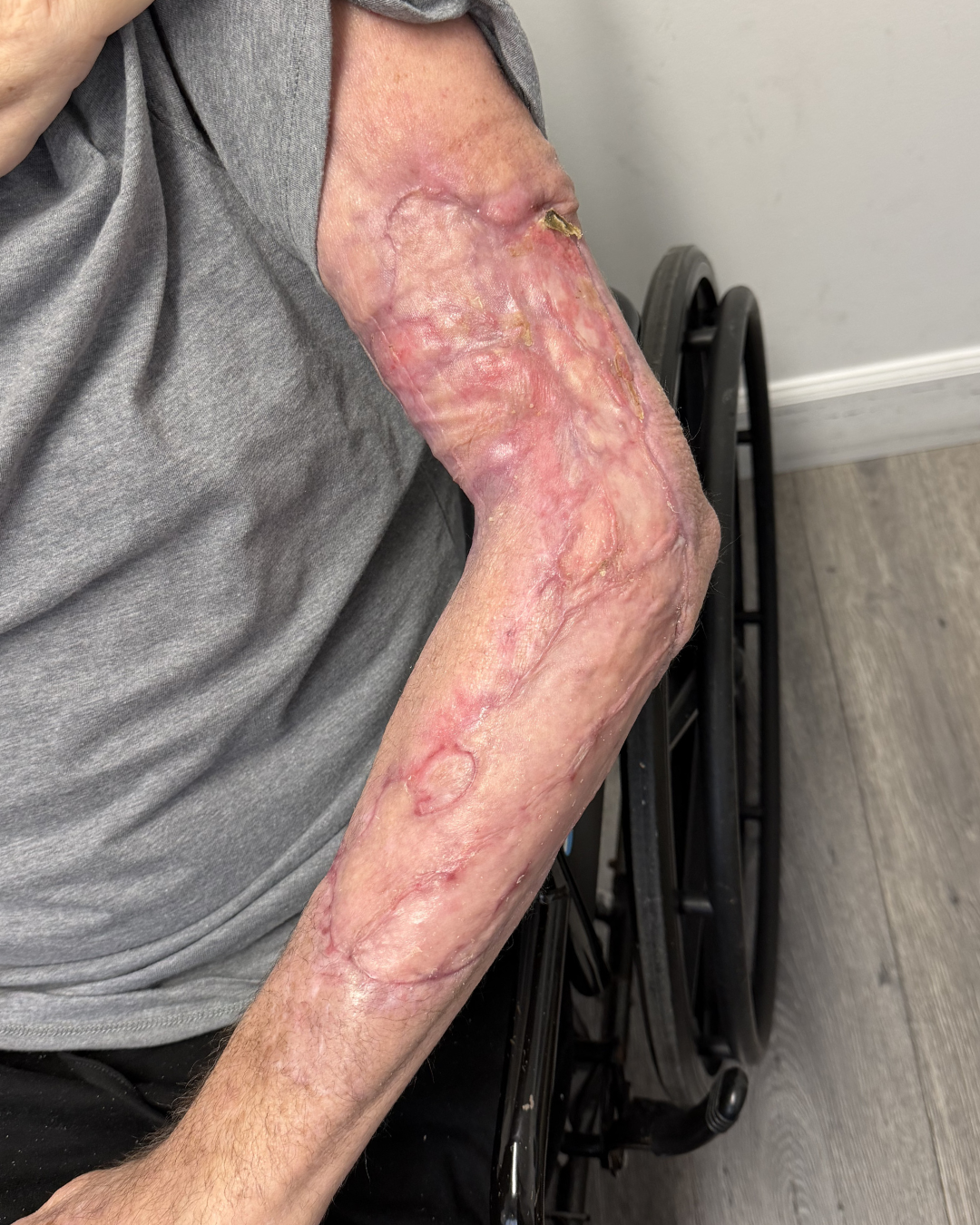
Substantial healing with full arm function.

By the latest documented follow-up, the surgical site had healed substantially and the arm remained fully functional. The scar was still expected to continue maturing beyond this stage.

Individual recovery timelines and outcomes vary according to the nature of the injury and the treatment required.

Final documented follow-up showing substantial healing of the reconstructed arm

Reconstruction is about more than closing a wound.

The treatment plan focused on durable tissue coverage, progressive healing, and preservation of arm function. At the July 13 follow-up, the arm was fully functional while scar maturation continued.

  • Substantial wound closure and tissue healing
  • Preserved movement and functional use of the arm
  • Continued follow-up for scar maturation and long-term recovery

Why severe traumatic wounds may require staged care.

Complex dog-bite injuries may involve contamination, tissue loss, and areas whose viability cannot be determined immediately. Serial debridement allows damaged tissue to be removed while the wound is reassessed and prepared for reconstruction.

Once the wound is ready, definitive coverage may be performed. Follow-up then focuses on graft or flap healing, wound stability, movement, scar development, and any additional treatment that may be medically appropriate.

Learn more about dog bite reconstruction in Los Angeles →

01 · Stabilize

Evaluate the full extent of injury

Assessment considers soft-tissue loss, contamination, circulation, underlying structures, and functional concerns.

02 · Prepare

Remove nonviable tissue

One or more debridements may be required before the wound is suitable for definitive reconstruction.

03 · Reconstruct

Provide durable coverage

Reconstructive options depend on wound location, size, depth, tissue availability, and the patient's clinical needs.

04 · Recover

Monitor healing and function

Postoperative care evaluates closure, tissue viability, range of motion, function, and scar maturation over time.

REAL PATIENT CASE SHARED WITH AUTHORIZATION. THIS PAGE IS PROVIDED FOR EDUCATIONAL PURPOSES AND DOES NOT CONSTITUTE MEDICAL ADVICE. INDIVIDUAL RESULTS, TREATMENT PLANS, AND RECOVERY TIMELINES VARY. A CLINICAL EVALUATION IS REQUIRED TO DETERMINE APPROPRIATE CARE.

Patients · Physicians · Attorneys

Complex traumatic injury case?
Let’s talk.

West Empire Surgery evaluates qualified dog-bite and traumatic-wound cases requiring plastic and reconstructive surgical care. Patient, physician, and attorney referrals are welcomed.